
Hi, kids!
It’s time once again to turn a jaundiced eye toward the news and newsmakers of the day who, in my cynical opinion, either contributed to our quality of life or detracted from it in some significant way…
Volusia Flooding – Now, two can play that game…
In my view, for far too long real estate developers have been gifted carte blanche to build when, where, and what they want here in the Sunshine State.
The results have been wide-ranging – a virtual blanket of zero lot line cracker boxes (“Starting in the mid $300’s”) and ugly sticks-and-glue apartment complexes covering the state – terribly destructive to our sensitive environmental processes and the quality of life of existing residents.
We are repeatedly told by our ‘powers that be’ they have some bizarre moral obligation to approve more, more, more to accommodate a wave of transplants to Florida. Rather than allow supply and demand to dictate higher resale prices while controlling the pace, suitability, and quality of growth state legislators have openly shit on the concept of Home Rule in a bid to consolidate power.
As a result, malleable “rent a representatives” in Tallahassee have given their political benefactors in the real estate industry extraordinary statutory protections that increasingly limit local government’s ability to control growth, and there’s not a lot We, The Little People can do about it.
Or is there?
Here in Volusia County, the majority of the County Council have proven to be little more than lapdog lackeys – running interference for their uber-wealthy donors in the real estate industry, rubber stamping development, and strategically dragging their heels on any attempt to slow growth or require low-impact construction practices – adding to the problem while refusing to act decisively to alleviate the scourge of development-induced flooding.

In January, officials in the City of Underwater in Southeast Volusia voted to tap the brakes on development with a temporary moratorium on new construction to give the community a chance to modify stormwater protections and find commonsense solutions to repeat flooding.
In May, the behemoth Lennar Homes – reportedly the second-largest developer in the United States – filed an action in Circuit Court seeking judicial review and reversal of the City of Edgewater’s denial of their final Phase II plat for Edgewater Preserve (in my view, another one of those perverse and antithetical monikers that only a real estate marketing firm could conjure) citing stormwater concerns.
It appears that Lennar is intent on pressing forward with its plans for Phase II – regardless of the community’s attempts to protect existing residents from what has been described as “severe and repeat” flooding – something many suggest is the result of changes in topography brought by new development.
During Florida’s 2025 Legislative Circus, legislators passed a bill amending the platting statute which now takes the local elected body out of the approval process. Instead, the local governing agency must appoint an “administrative authority” to process and review plats and replats for developments, and an “administrative officer” to approve the plat.
If signed by Gov. Ron DeSantis, the law smoothing out the humps and bumps for developers intent on fast tracking projects would take effect on July 1, 2025.
Last week, the Volusia County Council approved a fox in the henhouse resolution appointing the Land Development Division of the Growth and Resource Mismanagement Department as the administrative authority and County Manager George “The Wreck” Rectenwald or his designee as the approving official…
So, who looks out for existing residents?
Unfortunately, so far there was little that existing residents could do but bend over and bear it…
Now, it appears the influential law firm of Morgan and Morgan is letting waterlogged homeowners know that two can play that game. Last week, the firm filed suit on behalf of two Deltona couples alleging that a Lennar Homes development near Deltona has resulted in “repeat flooding issues” on their properties.
According to a report by Sheldon Gardner writing in The Daytona Beach News-Journal:
“The 13-page complaint, filed June 11 in Circuit Court in Volusia County by Morgan & Morgan’s Business Trial Group, focuses on Lennar’s “alleged flawed design and construction of the stormwater management system” in Vineland Reserve, according to a statement from the law firm. The plaintiffs are Suzanne and Mark Duda and Jerry Woods Jr. and his spouse, Robin.
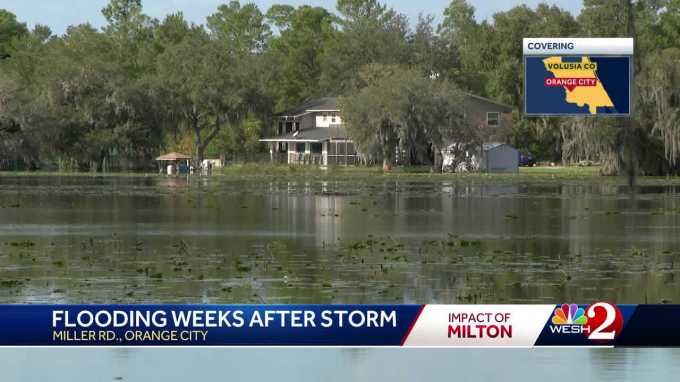
Morgan & Morgan recently filed another lawsuit dealing with flooding complaints in Volusia County; the firm is representing multiple people over flooding around Miller Lake in Orange City.
Lennar Homes started building the development off Doyle Road in 2022. Before the development came along, “homes in the area allegedly had no history of substantial flooding during rainfall event.”
“Now their homes are alleged to be sustaining ongoing damage, and they are allegedly unable to use or enjoy their property,” according to the law firm. “The lawsuit claims that the plaintiffs communicated with Lennar several times to express their concerns, and despite allegedly being fully aware of the drainage issues, Lennar has not adequately repaired the system or paid for the damages already incurred.”
(Find the News-Journal report here: https://tinyurl.com/y3z3bzwm )
This lawsuit represents a quantum shift in the power dynamic that has squeezed Florida homeowners between voracious developers and their shills in government, leaving many with the option of selling their homes in an after-the-fact stormwater mitigation scheme, making expensive renovations after each event, or living in fear of the next unstoppable inundation.
In my view, even here in the Biggest Whorehouse in the World, the idea of existing residents being repeatedly victimized while out-of-state developers haul untold millions out the denuded pine scrub – with no legal recourse against either those who planned it, or those who permitted it – is counter to our concept of basic fairness, due process, and a respect for the property rights of everyone effected.
City of Palm Coast – Dissecting the Obvious
From the earliest origins of participatory government, anthropologists have struggled with the question of why humans developed the social, judicial, and bureaucratic institutions that are now such an integral part of our society (and individual tax burden…)
According to social scientists, the “cooperative theory” suggests that governments were initially developed as a means of coordinating common tasks between early tribes, a communal contract of sorts, where everyone gave up some of their own resources in exchange for collective benefits, a collaborative agreement that avoided conflict to meet shared needs.
By contrast, the “extractive theory” assumes that “might makes right” – with powerful groups extracting tributes, taxes, and resources from weaker ones – then ensconcing themselves as the ‘political elite’ and perpetuating a pernicious cycle using what has been described as “institutional bullying.”
Sounds eerily familiar, eh?
According to Leander Heldring, an Assistant Professor of Managerial Economics & Decision Sciences at the Kellogg School of Management:
“We see it clearly in the archaeological and historical record,” he says. “Initial assembly meetings become less important, and you see people becoming enforcers within bureaucracies. So even if the initial push for developing these institutions was coordination, afterwards you’d still have to protect them. And that tension is very much still with us.”
Look, I’m not an educated man, but I spent the bulk of my adult life serving in a small municipality, which I still believe is most accessible, responsive, and efficient level of government. Based upon that experience, I learned that the élan vital of any government organization is a fundamental commitment to service.
At least it should be.
An organizational dedication to provide those essential functions that protect the safety and welfare of citizens, deliver essential services, maintain public infrastructure, mitigate threats, manage sanitation and stormwater, and provide the myriad other services that address common needs, improve quality of life, and meet the collective goals of the community.

In a modern council/manager system, the citizens elect representatives to act in their interest, handle legislation, allocate resources, and hire a competent manager to direct the multifaceted day-to-day operations of a working local government under the provisions of the city or county’s charter.
But what happens when things go awry and the finest traditions, protections, and social contracts of good governance come apart like a bad flywheel?
Typically, that’s when governments in crisis turn to a highly compensated “consultant” – the proverbial “expert from out-of-town,” someone with a nice suit and briefcase – someone who rides into town and spends a copious amount of the people’s time and money dissecting the obvious.
At the end of the day, the “expert” will prepare an elaborate report based on their “findings” and present it to the exasperated council or commission who hired them.
Unfortunately, many consulting firms (at least those who want other government contracts) will often play the role of the distracted wrestling referee – failing to point out the gross dysfunction, personal agendas, and mercenary loyalties of the elected dullards – as the root cause of the organizational inefficiencies and whale-shit staff morale they were hired to study in the first place…
Last week, the tumultuous City of Palm Coast, a community in a neck-and-neck competition with the Lost City of Deltona as the most disastrously dysfunctional municipality in the Metropolitan Statistical Area, voted to spend some $60,000 to bring in the national consulting firm Plante Moran to conduct an “Entity‑Wide Risk Assessment” this summer.
According to recent media release by Palm Coast’s municipal mouthpiece:
“The scope of the assessment includes evaluating current City capabilities and developing a framework the City can use to assess risk on an ongoing basis. Plante Moran will conduct interviews with key stakeholders to identify operational, strategic, financial, and compliance-related risks. Based on those findings, the firm will work with City leadership to prioritize risks, create targeted mitigation strategies, and recommend ways to align these efforts with the City’s long-term objectives. Additionally, the City will receive guidance on actionable measures that can enhance operational efficiency and improve services across all departments.”
I know what you’re thinking – those basic operational goals (spelled out with such flourish by the Palm Coast Communications & Marketing division) are exactly what most communities expect from their city/county manager…
You’re right.
In my unscientific view, you don’t need a $60K study to see that the fissures so prevalent among the competing entities – divisions that have resulted in the public castration of Mayor Mike Norris, and exposed the self-serving allegiances of certain elected officials (and senior bureaucrats) intent on facilitating Palm Coast’s shove ten-pounds of shit in a five-pound sack growth management strategy – are the result of mercenary loyalties and piss-poor leadership.
And it’s getting worse…
This week, we learned that Jason DeLorenzo, Palm Coast’s community development director and chief of staff, has fled the city government’s troubled ziggurat for greener pastures as the assistant city manager of Palm Bay.
In my view, with a list of city manager applicants now eliminated (or having fled for anywhere else amidst the internal shitshow) and senior officials beginning to jump ship, the experts at Plante Moran have their work cut out for them.
Let’s hope the most recent “experts” to peek behind the curtain of this horribly dysfunctional government demonstrate the professional integrity and civic honesty to place the blame where it rightfully belongs…
Bunnell City Commission – A Startling Betrayal
“The Bunnell City Commission in a stunning move at the very end of its meeting Monday night, before a nearly empty chamber, voted 3-2 to revive the 8,000-home Reserve at Haw Creek development the commission rejected just two weeks ago. The item was not on the agenda.
Mayor Catherine Robinson prompted the motion, which Commissioner Pete Young offered without batting an eye–or asking questions–though Young had been in the 3-2 majority to reject the proposal on June 9. Robinson had met with the city manager and the developer for three hours Monday morning. She said the developer was prepared to submit a revised plan that takes public concerns into account.
Young said he’d met with City Manager Alvin Jackson and others on Friday to discuss the development and to let Jackson know he was supportive of Haw Creek as long as it made certain changes. “I met with the city manager and our people,” Young said in an interview today. He wasn’t sure if the developer was among those in the room. “All know is I told them what I would like to see and they said OK, we’ll pass it on to them.”
With Young’s reversal, the motion to reconsider carried, 3-2, with Commissioners John Rogers and David Atkinson as if in too much shock to comment. Rogers walked out immediately after the vote and the gavel to end the meeting, not addressing anyone in the room.”
–Pierre Tristam, writing in FlaglerLive.com, “Bunnell Mayor in Stunning Maneuver Revives 8,000-Home Development Commission Killed 2 Weeks Ago,” Tuesday, June 24, 2025
You read that right.
In a viciously underhanded use of an off-the-agenda public policy by ambush, Bunnell Mayor Cathrine Robinson waited until the end of Monday’s City Commission meeting to resurrect the prospect of the Reserve at Haw Creek – an 8,000-home monstrosity that will blanket over 2,800 acres between SR-100 and SR-11.

Before her incredibly suspicious switcheroo – on Monday morning, Mayor Robinson said she met with the developer (out of the public’s prying eyes) – where she was told a “revised plan” would be submitted that addressed some of the myriad concerns expressed by frightened residents who see the development as a threat to their quality of life and the character of this small community.
Because it is.
Among other potential impacts, once built out, the Reserve at Haw Creek is expected to increase traffic from the current 8,817 daily trips to an obscene 81,943 trips per day on already stressed area roadways.
After strategically waiting for interested residents to leave the chamber – Mayor Robinson sprang her clearly choreographed surprise:
“I have a request based on a meeting with city staff and the Northeast Florida developers about the Haw Creek development to address both the public and the commission’s concerns,” the mayor said. “I would like a motion to reconsider the denial of the rezoning application and move forward with the development agreement.”
Once the motion was made and seconded, the vote to approve reconsidering both the planned unit development and the development agreement passed 3-2, with Commissioners John Rogers and David Atkinson dissenting.
Now, shocked residents of Bunnell are left to ask the troubling questions…
Such as, how was the developer was so conveniently able to persuade Mayor Robinson to bring this wildly controversial project back for reconsideration just two-weeks after the commission voted 4-1 to reject it?
Or why the massive development – one that threatens to fundamentally change everything about the community – was resurrected by a backstabbing mayor at the end of a public meeting with no public notice, substantive information, or citizen participation?
This was wrong, duplicitous, and horribly deceitful.
In my view, Mayor Robinson and those elected officials who pushed this sneaky scheme have sold their political souls to push an agenda, and they will never be trusted again…
The residents of Bunnell deserve better from those they put their solemn trust in…
Quote of the Week
“At their June 18 meeting, (Daytona Beach) city commissioners voted to amend their agreement with Protogroup to allow the company to be partially reimbursed for its costs for a beach access improvement and the new one-story building. Once those projects are complete, Protogroup will be reimbursed up to 50% of the property taxes for them paid to the city’s community redevelopment area fund over five years.
The agreement originally said Protogroup would have to completely finish the condo tower before it would get some of its money back for things such as new pedestrian beach access and improved water and sewer infrastructure. Now the agreement says the company just needs to complete the new one-story building.
“I just want to hide that ugly rebar we’ve been looking at for three years,” said City Commissioner Ken Strickland. “I don’t want to do anything that hampers getting that out of our eyesight.”
–Reporter Eileen Zaffiro-Kean, writing in The Daytona Beach News-Journal, “Long-idled Daytona Beach condo project set to resume construction in July,” Thursday, June 26, 2025
What a joke…
For the umpteenth time since the decade-old debacle of the Protogroup’s abandoned mess of stained pilings and rusted rebar in the heart of our core tourist area began, it appears the Daytona Beach City Commission has simply given up – now deciding to do away with any semblance of holding the developer to his word.
Instead of initiating condemnation procedures to ensure compliance, it appears city officials are going to incentivize a façade – anything to camouflage the suppurating eyesore that serves as a monument to another failed “panacea project” all the right last names promised us would change our fortunes for the better.
Bullshit.
According to the News-Journal’s report, “In early September 2022, the city’s chief building official issued a condemnation and demolition order that said portions of the unfinished structure were dangerous and “likely to partially or completely collapse or to become detached or dislodged” due to faulty construction, neglect, abandonment, exposure to the elements, damage and decay.
The city backed off the condemnation and demolition threat after Protogroup cleaned up the site and agreed to a plan to have structural engineers inspect the foundation work before resuming construction.”
So, is the unfinished structure “likely to partially or completely collapse,” or not?
Unfortunately, the City of Daytona Beach and Volusia County have allowed developers to get them over a barrel, and there’s not a damn thing anyone can do about it now.
In an October 2018 piece in The Daytona Beach News-Journal, the former chairman of the ill-fated Beachside Redevelopment Committee, Tony Grippa, prophetically said:
“The city still lacks an overall strategy as it relates to A1A and the beachside corridor, and this is what happens when you put all your eggs in one basket.”
At this point, however, completion of the (Protogroup) project is imperative, Grippa said.
“It would be absolutely devastating to have, in addition to all the old boarded-up buildings, now a new partially completed building,” Grippa said. “That sitting vacant and empty would really hurt the beachside, optically, economically and emotionally.”
Tragic, indeed.
In my view, it is time our elected and appointed officials start representing those of us who pay the bills and demand the provisions of performance assurances and completion deadlines are enforced – or else.
This mercurial capitulation sends a bright signal to other developers that if you defy regulatory authority long enough, the ‘powers that be’ responsible for protecting the health, safety, and welfare of the public will simply cave and give you whatever you demand to complete (insert “game changing” project here.)
And Another Thing!
Last week, a dear friend and I traveled to “La-La Land” – Los Angeles, California.
Beverly Hills, to be exact. Swimming pools. Movie stars.
And more bone-crushing traffic than I’ve ever seen my life…
The purpose of our trip was to check on another lifelong friend who has been under the weather of late, courageously participating in a cutting-edge experimental treatment at UCLA’s impressive Ronald Reagan Medical Center. An exciting technology that may eventually help doctor’s treat cancer in a more precise way.
While I’ve visited Southern California in the past, this was the first time I saw much of what Los Angeles has to offer. Great experiences like dinner at the classic “Old Hollywood” restaurant Dan Tana’s, and a wonderful afternoon over cocktails at the iconic Polo Lounge in the Beverly Hills Hotel.
Our bartender, Vladimir, could not have been more accommodating, and treated two ballcap/blue jean clad yokels from Florida like gold – taking time to explain the rich history of the hotel (now owned by the Sultan of Brunei) – and jokingly offered to pour us a McCallan 72 from a lacquered case behind the bar – a rare Scotch offered at $10,000 a shot…
“Make it double, Vlad…”
Just kidding. As it stood, I needed a second mortgage to cover the bar tab.
The conspicuous wealth, glitz, and glamor of Tinseltown set up a classic Jed Clampett meets George Jetson story – an up-close and jaw dropping exposure to some incredible technological/AI advances currently in operation on the west coast.
For instance, I took advantage of the new (to me, anyway) Waymo self-driving autonomous vehicle for local transportation. A product of Google that was a decade in development, the service utilizes the all-electric Jaguar I-PACE – a sleek four-door sedan with a whirring array of sensors on the roof and each corner of the vehicle – to include an illuminated sign on the roof that displays the riders name at the point of pickup.
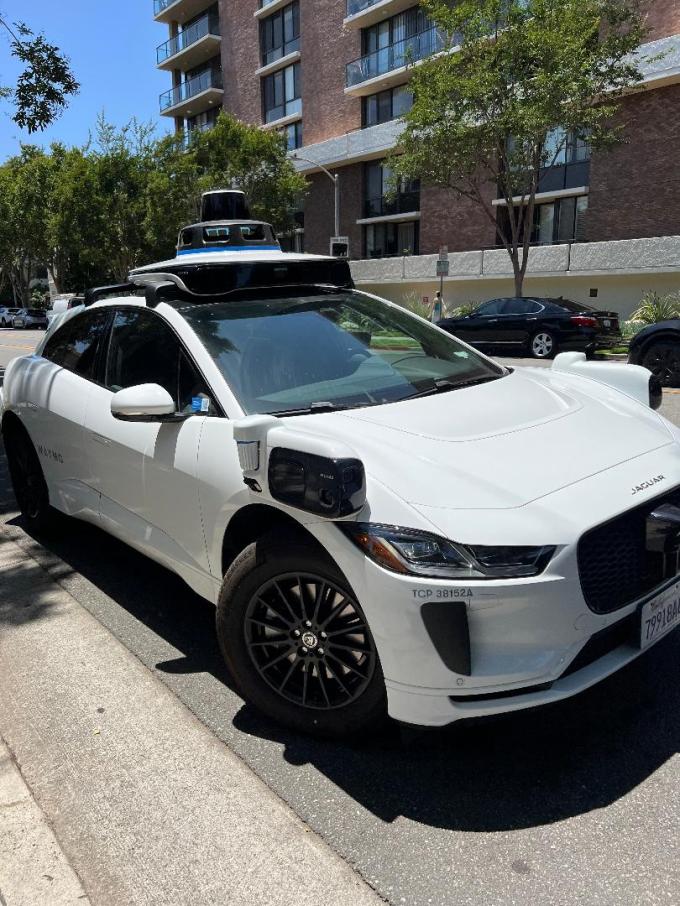
Much like Uber or Lyft, the ride is summoned (and the fare paid) from your phone. Once the location is entered, the Waymo drives to your GPS location and with the touch of a button on the app, handles emerge, and the doors unlock.
Once inside the comfortable rear seat, the rider fastens the seatbelt, touches a “start ride” button on the screen, and you are literally along for the ride.
What happens next is a little scary – and infinitely fascinating.
From the back seat, the rider watches as the vehicle enters traffic and proceeds by the most expedient route – the steering wheel eerily turning independently, as though operated by a spectral “driver” – smoothly navigating to your destination.
I’ll admit, the first trip was a bit freaky, and, over time, I discovered a few “wrinkles in the matrix.”
For instance, during one trip, the Waymo passed my hotel and dropped us inconveniently a block away, another time, the car circled the block at our destination before getting its bearings and returning to the drop-off point.
In each case, the artificial intelligence and various sensors powering the navigation system were “learning” – getting better, more precise with each trip – a weird digital cognition training a complex decision-making capability – gathering data from each “experience,” never forgetting the lessons learned, becoming “smarter” and more accurate with each “mistake.”
During the course of the week, I found myself relying more on Waymo and less on manned ridesharing programs that work much the same, but with a person at the wheel.
In another weird revelation, while having lunch in Westwood, I was surprised by what appeared to be an orange Igloo cooler on wheels trundling down the sidewalk outside the restaurant.
I did a double-take…
It was “Coco” – a purpose built “robocourier” – which autonomously transports groceries, prepared food deliveries, or other goods along city sidewalks at a brisk walking speed (or faster in a bicycle lane) – a device that became so ubiquitous that the novelty quickly wore off and I stopped noticing the little buggers.
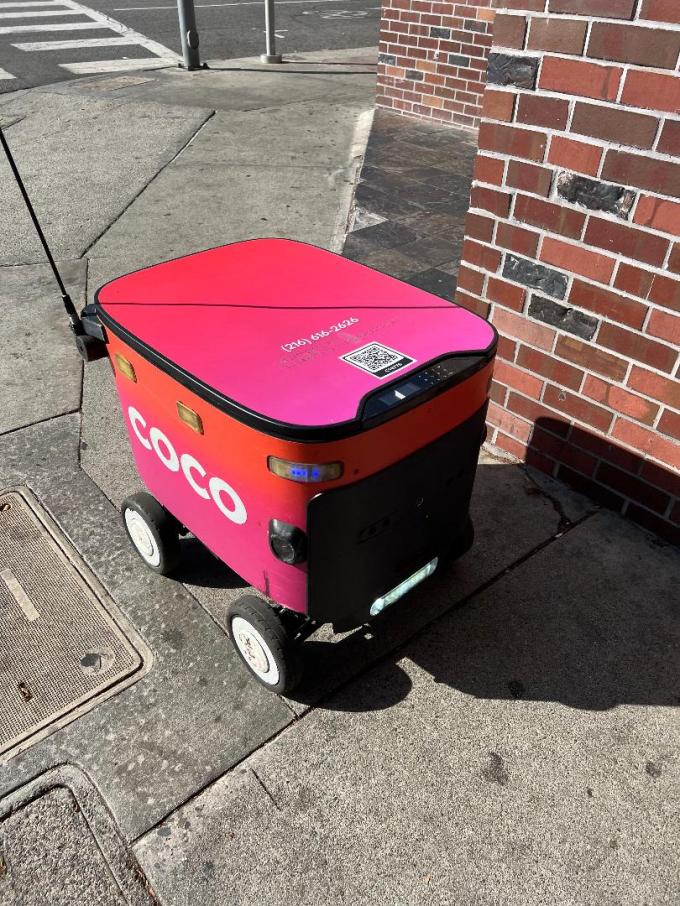
As Coco went about its appointed rounds, the cart would stop for people walking on the sidewalk, and I realized that human beings were an impediment to its progress – in more ways than one…
According to Coco Robotics, the urban logistics service is now available in Los Angeles, Chicago, Miami, and Helsinki.
In retrospect, it is somewhat unsettling that in time I preferred to deal with a self-driving car than a fellow human being trying to earn a living – no tip and no complex social interaction (including one awkward exchange with an Uber driver who offered to provide us with Russian hookers and Armenian vodka during our stay in LA…true story.)
I now realize that the ease and rapidity with which I relinquished control and acclimated to an autonomous vehicle and a robotic delivery cart is ultimately how we, living/breathing/emotional beings, may ultimately become obsolete – mere impediments to “progress” – as artificial intelligence “learns” from experience and interactions, just like we do.
Which prompts disturbing question like what role will “we” play in a world dominated by (sentient?) machines, and, ultimately, how will we address the Frankensteinian conundrum of how to control the monster once it escapes our control?
Welcome to the future, Barker…
Now, if you’ll excuse me, I’ve got to spend some quality time with my toaster. It missed me while I was gone…
That’s all for me. Have a great weekend, y’all!




 Barker's View