Hi, kids!
It’s time once again to turn a jaundiced eye toward the news and newsmakers of the day who, in my cynical opinion, either contributed to our quality of life or detracted from it in some significant way:
The Debacle at Daytona: Riding the Wave of Confusion
“Henry referred to the “Hungarian trip” and other things reported in the press as “just mythical untruths,” but did not describe what was untrue about the reports or provide more information about the charge.
“I’ve personally tried to not to address much of that because I don’t think that it’s healthy. Let’s just try to ride the wave and get to the end,” Henry said.
Henry has not responded to multiple calls and texts from The Daytona Beach News-Journal for recent stories.”
–Reporter Sheldon Gardner, writing in The Daytona Beach News-Journal, “Daytona Beach mayor claims news reports are false, but won’t say why,” Monday, June 22, 2026
Despite my better judgement, last week I poured a strong fortifier and tuned into the regular meeting of the Daytona Beach City Commission, a serialized tragicomedy that always challenges the limits of human reason (and the ability of my pyloric sphincter to hold down bile…)
It can be tough to watch…
Per usual, confusion reigned when – during the same meeting, the City Commission unanimously voted to approve modifications to historic tree preservation and mitigation requirements – they also voted to approve the destruction of twelve specimen trees to accommodate an affordable housing project at the southwest corner of 9th Street and Vine Street.
Adding to the absurdity, when the agenda item was called, the motion to approve the proposed resolution effectively died for lack of a second, a parliamentary procedure that typically signals to the chair (Mayor Henry) that only one member wants to proceed with the issue.
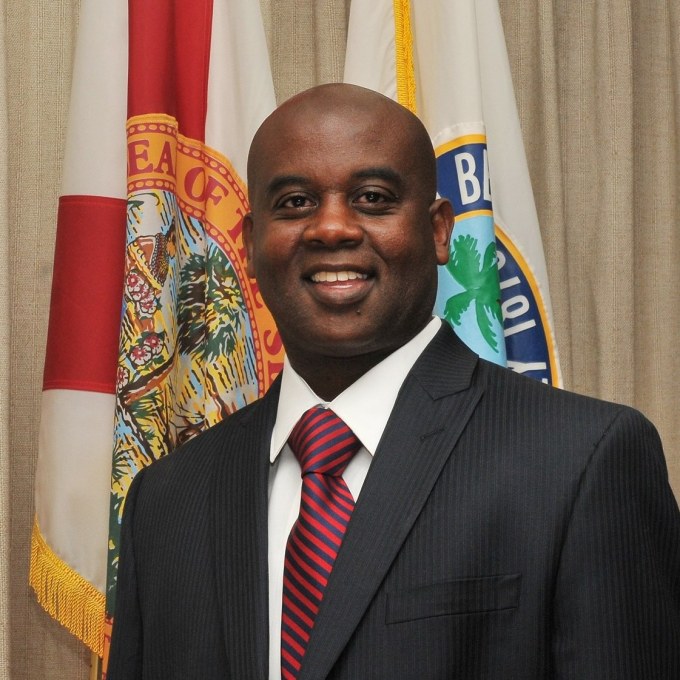
“I’m going to have to break my vow, and I’m going to have to support this. I have vowed to try not to do this, but our need is great, our need is great, so that’s where I stand,” Mayor Henry explained.
Rather than call the motion lost for lack of a second and move the meeting along, Mayor Henry inexplicably stepped down and seconded the motion before calling the developer’s land use attorney to approach the podium and give one hell of a sales pitch for removing twelve healthy live oaks ranging from three to four feet in diameter.
The presentation was accompanied by the usual elaborate architectural renderings of the 80-unit complex – with the enticement of subsidized rental rates around $200+ a month (along with numerous incentives for the developer) – and a promise that this “unicorn” project is worth the sacrifice of old growth hardwoods that benefit our environment in innumerable ways because, ‘people over plants,’ right?
You remember “plants?
Those green things that used to help control flooding until they were sacrificed on the altar of greed for the latest/greatest residential development?
It was clear that Mayor Henry was immensely proud of his parliamentary sleight-of-hand when the resolution later received the unanimous approval of the City Commission, effectively clearing the way for the project to proceed.
Screw it. What else where they going to do, say No?
Here in Florida, real estate developers own the political soul of our state legislature, shameless shills who are bought and paid for, traded like chattel, and used like dull implements to produce a very profitable result. Damn the consequences for existing residents…
During the same meeting, city officials approved changes to the land development code allowing “administrative approval” of affordable housing development applications as mandated by state law. As a result, in this compromised legislative climate, most substantive local growth management regulations have been preempted to the state, and the term “affordable housing” has become a magical incantation.
When the spell is chanted with the right intonation by a savvy land use attorney, the resulting witchery immediately supersedes any and all commonsense development regulations, density considerations, infrastructure limitations, specimen tree mitigation, planning review, landscape requirement, or the preservation of a community’s historic identity, allowing any project bearing the ‘affordable’ moniker to proceed, come what may.
In addition, last week we learned that a report by Daytona’s Internal Auditor Abinet Belachew found no serious issues with purchasing card use and policies in the City Attorney’s Office.
According to an exclusive report by Sheldon Gardner in the News-Journal, Belachew “…told commissioners June 17 that since he started digging into spending in September, he has not found any conclusive evidence of fraud in the city,” and described city officials as “cooperative” during his inquiry.
That’s great news.
While Mr. Belachew continues to look at the city’s financial practices and internal controls, state auditors are examining spending, and the Office of Statewide Prosecutor continues what has all the appearances of a concurrent criminal investigation…
For the sake of anxious Daytona Beach residents, dedicated city staff, and the stability of the community, let’s hope these important probes come to a conclusion soon.
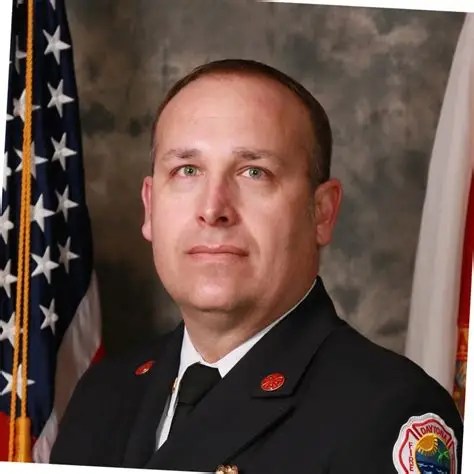
Last Friday, the turmoil claimed its latest scalp when embattled Daytona Beach Deputy City Manager/Fire Chief Dru Driscoll threw in the towel and announced he will be retiring next month following a 27-year career.
Perhaps he was tired of riding Mayor Henry’s wave of secrecy?
It is incredibly sad when a longtime public servant like Chief Driscoll leaves under a cloud, especially with so many unanswered questions remaining.
More so when the individual misplaces their anger on those they once served.
Unfortunately, rather than depart with his head high, Driscoll took a swipe at concerned residents who have taken to social media to vent their concerns amid the information vacuum that is Daytona Beach City Hall. Mounting questions that began last year when WFTV-9 investigative reporter Demi Johnson broke details of what would become the “P” card scandal.
Questions of excessive spending, overtime, and the termination of an identified whistleblower later expanded to the Fire Department…
Those concerns were compounded by several damning internal audit reports of possible misspending and policy failures – along with a scathing rebuke by the state’s Joint Legislative Auditing Committee. The lack of answers resulted in the state’s ongoing review of city spending practices and the expenditure of permitting funds.
According to a recent News-Journal report, “His letter doesn’t state a reason for his (Driscoll’s) retirement, but it does criticize “default pessimism in today’s social-media driven culture.”
“Public discourse has frequently devolved into uninformed digital shouting and fact-less emotional commentary from individuals unwilling to educate themselves or roll up their sleeves to improve our community,” he stated. “Despite this shift in modern culture, I remain hopeful that an optimistic few will continue to carry that torch for a greater tomorrow.”
That’s too bad.
In time, I hope Chief Driscoll realizes that this predicament isn’t the result of “uniformed digital shouting.”
In my view, this is a natural response to the city’s bureaucratic instinct to circle the wagons – what appears to those looking in as a continuing course of conduct by senior elected and appointed officials at City Hall involving suspicious practices, expenditures, and insinuations – suspicions that have resulted in an active investigation by the Florida Attorney General’s Public Integrity Unit…
My hope is that Chief Driscoll – now free of the yoke of bureaucratic conformity – will use the insight gained from his unique vantagepoint to provide substantial assistance to state investigators.
In my view, despite Mayor Henry’s vow of silence as he tries to “ride things to the end,” it is time to clear the shroud of suspicion that has enveloped City Hall and return the public’s trust in their municipal government.
Volusia Legislative Delegation: Redefining the “Mealy-Mouthed” Politician
As a cheap seat chirper and unabashed critic of self-serving politicians everywhere, I have a million-and-one colorful adjectives in my quiver. In fact, on occasion Barker’s View readers will send me “just the right word” to add to my growing lexicon of smartass quips and descriptors.
One of my favorites is the ancient term “mealy-mouthed,” defined as “…avoiding the use of direct and plain language, as from timidity, excessive delicacy, or hypocrisy; inclined to mince words; insincere, devious, or compromising.”
Yeah. That’s a good one…
I was reminded of that apt definition when members of Volusia’s legislative delegation skirted the most significant civic issue of our time as they mewled and puled at a breakfast hosted by the Port Orange South Daytona Chamber of Commerce last week.
With no studies, legitimate audits, substantive external input, or basic understanding of the long-term ramifications of their actions, earlier this month, legislators took less than 48-hours to approve a consequential ballot question which essentially asks Florida voters if they like ice cream – without telling them the confection was made from horseshit – or how much it will eventually cost them.

The pernicious powerplay pushed by Gov. Ron DeSantis as “reforming property taxes” in actuality seeks to shift the tax burden, destroys Home Rule, consolidates power in Tallahassee, and effectively exsanguinates the responsive, efficient, and accessible local essential services we enjoy.
Exchanging them for large, consolidated, and unwieldy public entities that will ruin the character and identity of our hometowns forever.
Now, those shameless shills that comprise our local legislative delegation have the unmitigated gall to insult our collective intelligence and essentially tell us, “Well, I hate the idea personally – it’s dangerous as hell and terrible for Florida. I just voted for it to avoid the wrath of Gov. DeSantis – oh, and I wanted to give you, the little people, an opportunity to vote on it. I’m generous that way…”
Bullshit.
According to a report by Jarleene Almenas writing in the Ormond Beach Observer:
“Up until about five weeks ago, legislators didn’t know what Gov. Ron DeSantis had planned for his property tax reform proposal.
And what he discussed at an event in Brevard County at that time is different than what ended up before the Florida House and Senate, said Sen. Tom Wright during a legislative breakfast hosted by the Port Orange South Daytona Chamber of Commerce on Friday, June 19.
Is the governor’s proposal viable? The feelings expressed by the Volusia legislators at the breakfast — Wright, and Representatives Webster Barnaby, Bill Partington and Chase Tramont — ranged from neutral to dubious, though they all voted to place it on the ballot for voters.
“He has not yet signed off on the budget,” Wright said. “So in my belief, because I’ve seen it happen many times already, if we didn’t vote yes on that bill, we would probably see all of our budget items zeroed out, and I’m under the belief that that bill was going to pass one way or another.”
For his part, Rep. Chase Tramont, a former Port Orange City Councilman (which means he knows the ramifications) and is currently standing for reelection, said he “wasn’t a big fan of the bill.”
According to the Observer, Tramont explained “When my vote took place a few weeks ago in the special session, it was not for the policy itself,” he said. “If it had gone through the legislative process as a legislative bill to be implemented right away, it wouldn’t have passed the House — I doubt it would have passed the Senate. The vote was to allow you to decide for it.”
Whether or not the amendment passes will come down to “massive education efforts,” Tramont said. People need to know what services will have to be cut, or, how funds will be replaced to keep them.
“So, is it really a tax relief?” Tramont said. “My fear is that it can hurt the lower-income people, because you get a lot of low-income homes and trailer parks that don’t pay any property taxes. Now all of a sudden they’re not exempt from getting an assessment to that property. Now, you’re going to get people on fixed incomes. It could be a bad situation.”
In keeping with the theme, former mayor of Ormond Beach Rep. Bill Partington, displayed elements of the clueless stooge character he plays in Tallahassee when he said, “There’s nothing in the bill that prevents governments from backfilling lost revenue, either with fees or special assessments, or whatever they call it,” he said. “I think cities are looking at that anyway, and it’ll end up being, instead of a tax relief, it’ll be a tax shift — it’ll just be a tax by a different name.”
“Or whatever they call it”?
Really?
As Sen. “Terrible Tommy” Wright admitted, what drove our cowardly political climbers to hastily approve a disastrous ballot measure that could destroy our hometowns was Gov. DeSantis’ extortionate veto pen.
An internecine quid pro quo tactic that threatened what The Daytona Beach News-Journal recently described as the paltry “sprinkle projects” earmarked for Volusia/Flagler in the 2026 state budget.
It appears our legislative delegation is getting a taste of their own medicine as Gov. DeSantis held them over a barrel during the special session. Now the foundational idea of managing local resources to efficiently meet the collective needs of residents who equitably pay for tailored services hangs in the balance.
Last year, when some municipalities were debating how best to respond to the gross overreach of SB 180 – the law that stripped local control of growth management regulations and preempted development decisions to the state – some area elected officials openly warned that opposing the state’s brazen attack on Home Rule and self-determination could have grave consequences.
At the time, New Smyrna Beach Mayor Fred Cleveland shuddered, “I don’t want us to be on the blacklist of those that get punished, one way or another, under the radar. A majority of our county commissioners have said to me we will get punished (if the city joined the lawsuit against SB 180). And it’s not right, I don’t like it, but it’s human nature…”
That’s not good governance – or “human nature” – it’s base thuggery.
Unfortunately, it appears the only ones exempt from the state’s bullying and intimidation are those special interests with the wherewithal to pay-to-play.
Wait until transactional politics – a system where “mega-donors” receive more of our hard-earned tax dollars than the “sprinkles” coming back to Volusia and Flagler – becomes the pecking order that determines which communities are gifted lifeblood from Tallahassee and which are allowed to wither and die.
In my view, our mealy-mouthed legislative delegation should be ashamed of their abject cowardice – and their acquiescence to Gov. DeSantis’ cheap powerplay.
They knew or should have known that this attack on Home Rule – a consolidation of power and money – will ultimately result in the demise of our mosaic of unique communities that sent them to Tallahassee.
And they did it anyway. Now claiming they were under duress.
Floridian’s deserve true tax (read: spending) reform at all levels of government. This isn’t it.
I hope you will consider the source of this initiative – and who stands to benefit the most. Learn all you can about this flagrant shim-sham and vote like your quality of life depends on it.
Quote of the Week
“West Volusia and the surrounding area are facing a question that communities across Florida are wrestling with: Who should pay for growth?
Too often, local governments approve new development while expecting existing residents to absorb the costs. Roads become more congested, infrastructure requires expansion, public services face additional demand, and taxpayers are ultimately presented with the bill. The result is a transfer of costs from those who profit from growth to those who simply happen to live here. That is neither fair nor sustainable.
Growth itself is not the problem. New residents, businesses and investment can strengthen a community. The problem arises when the government subsidizes growth by socializing its costs.
If a development creates the need for new infrastructure, utility capacity, road improvements or other public expenditures, those costs should be borne by the development and the people who benefit from it, not by existing homeowners through higher taxes or hidden subsidies.
The principle is simple: Growth should pay for itself. This is not anti-development. In fact, it creates better development. When builders, investors and local officials are required to account for the true costs of growth, projects are more likely to be economically sound and less likely to become long-term liabilities for taxpayers.
Local government should act as a neutral steward of public resources, not as a partner in shifting private costs onto the public. Residents should not be forced to subsidize projects they neither requested nor directly benefit from.
As our region continues to grow, we should insist on a straightforward standard: If a project cannot stand on its own without placing additional burdens on existing taxpayers, it may not be as beneficial as its proponents claim. Growth can be a good thing. But growth that depends on taxpayer subsidies is simply another form of corporate welfare.”
–Matt Johnson, Lake Helen, Letter to the Editor, West Volusia Beacon, “Growth must pay for itself,” Tuesday, June 16, 2026
What he said…
And Another Thing!
“Long as I remember the rain been comin’ down
Clouds of mystery pourin’ confusion on the ground
Good men through the ages tryin’ to find the sun.
And I wonder, still I wonder, who’ll stop the rain?”
–John Fogerty
Fourteen years ago this week, I read an article by Alan Farago, the current conservation chair of Friends of the Everglades, entitled “How the growth machine ate Florida.”
The piece gave a disturbing look at the erosion of growth management regulations in Florida, which have now been almost exclusively preempted to the state, by those craven political prostitutes in Tallahassee who do what they are told by those special interests who own their self-serving souls…
“Florida is an enduring fascination. It is politically influential and culturally backward. It is a great backdrop for television for which no one can remember the plot. Florida exalts development and possesses unique natural resources. Its chief attractions that drove development in the 1950’s are in states of decay, aquifers, springs, estuaries, rivers, bays and the Everglades alternately treasured and spurned, vaunted and trashed, lit by God’s towering thunderheads and buried in a God forsaken culture of strip malls and anonymous platted subdivisions far from places of work.”
Sound familiar?
I was reminded of Mr. Farago’s prophetic essay this week as I drove along Williamson Boulevard, traveling south between West Granada in Ormond Beach and ‘Boomtown Boulevard’ in Daytona Beach.
To the west, just south of Advent’s Memorial Hospital complex, I came upon another ubiquitous stretch of denuded land – a massive dusty moonscape now scraped clean – backed by a towering pile of fill, no doubt waiting on another gargantuan (insert sticks-and-glue cookie cutter development here).
Across Williamson Boulevard I also noticed one of the last remaining patches of greenspace in the area.
Undeveloped acreage marked by several bored rent-a-cows playing their role as theatrical props that ensure the property’s absurd agricultural exemption in the middle of this malignant suburban sprawl.
The undisturbed land with its cud-chewing cattle was holding standing water from recent afternoon thunderstorms, ponding in a large swath along the western edge of the property…
Where else is it going to go?
Rainwater. The great equalizer in the continuing “growth at all costs/people are moving here and we’re obligated to accommodate them” argument. The one natural resource developers, and those compromised shills they employ in local and state government, will never find a way to hide.
As the bulldozers continue to roar, the future of flood-control here on Florida’s “Fun Coast” looks grim…
Last week in an excellent report by News6’s Molly Reed, we learned:
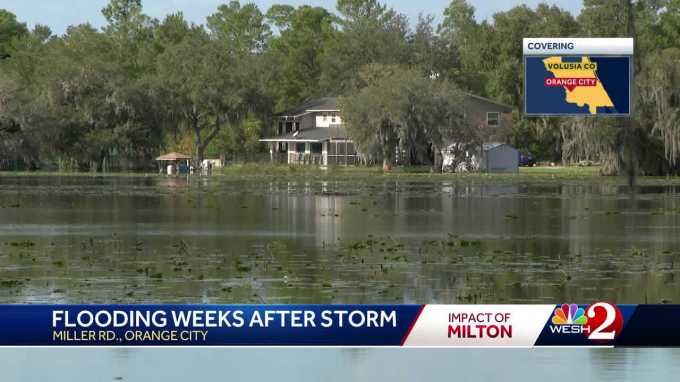
“Volusia County is on track to run out of money for stormwater projects by 2030.
County staff flagged the funding shortfall this week, warning that stormwater utility fees won’t generate enough revenue to cover planned drainage and flood-control projects. Routine maintenance could also take a hit. Officials say they want to get ahead of the problem now, before it grows worse.
Several large, multi-year projects are moving from the planning phase into construction, meaning the county will need sustained funding over the next several years — on top of any new problems that could emerge from future storms. One option on the table: raising stormwater impact fees.
That potential fee hike is a tough pill to swallow for residents who say they’ve watched flooding get worse for years.”
After spending time and money “studying” the myriad problems contributing to areawide flooding, when it comes time to implementing desperately needed stormwater mitigation projects, we’re told Volusia County is just four short years from running out of money to fund solutions.
Apparently, those who contributed to the problem by rubber stamping development don’t have a clue how to fix the problem…
Last month, Daytona Beach officials received a harsh dose of reality when the best and brightest the U.S. Army Corps of Engineers has to offer shrugged their shoulders and said, “Nuttin’ we can do, y’all,” to control historic repeat flooding in the city’s desperately challenged Midtown neighborhood.
In fact, the experts concluded that given the area’s bowl-shaped topography – and the city’s wholly inadequate system of antiquated drainage canals – normal flood-control solutions could not be “economically justified,” claiming that for every dollar of benefit the city would need to spend $10.
Tragically, those victims who have been repeatedly inundated are now being told saving their family homes is impossibly unsustainable.
But what about those across the width and breadth of Volusia County whose properties can be saved from the threat of repeat flooding using common sense low-impact development practices, comprehensive drainage strategies, stormwater mitigation projects, and restricting impermeable growth until adequate infrastructure is in place to absorb the impacts?
What will our powers that be tell them four-years from now?
If you think anyone in Florida’s “growth machine” – to include those marionettes who run interference for it in the state legislature – give two-shits about the plight of increasingly waterlogged existing residents, think again.
I say again – vote like your quality of life depends upon it…
That’s all for me. Have a great weekend, y’all!


Barker, why are you so easy on Henry?
The commissioners on the city except Cantu, are terribly ineffective. Especially Reed, Henry and strickland. All should resign. The city manager of any city is hired for 2 reasons-to run the operations of a city impeccably and to keep the city out of legal harm. Dearcher has done neither.
LikeLike
.
Marc Henry was a commissioner when they found mail in ballots under his computer.He lost that job as his wife is accused of taking merchandise twice and not paying.Guess the hood voted Henry in as Mayor.Have had homes for 50 years and we have no kids and paid school taxes.Voting for no property tax so I can pay for Avalon getting water and sewage for Daytona.Beat Kahli go back to Switzerland.
LikeLike
Brilliant and true
LikeLike
Barker drove down Williamson.No politician has anything to say about the Hand Avenue Bridge.With all the rentals built hard to figure out where the exit in Ormond Beach will be.Let the renters pay property tax for all their kids going to Volusia County trash schools.
LikeLike
Peter. Good posts. Daytona is a thug city. No accountability for spending in that city. Tolland is posting her huge campaign signs illegally. In city, county and FDOT right of ways. It is the city of ormond responsibility to take these signs down. Ormond is practicing selective enforcement.
LikeLike
Marc Tolland is an Ormond Beach good ole girl who knows every politician born here..She would be just as bad as Partington who opened up Ormond to builders.Emailed him 8 years ago about all the building and his reply was we are underbuilt.Perfect example of a good ole boy who has many builder friends and friends with money.Keep Ormond alive but stop Avalon and Beat Kahlis 9000 homes just on the west side of exit 40 which is Daytona who wants our water and sewage control.
LikeLike